When You Have Spiritual Protection, You Don’t Need Martial Protection
Aug 25, 2016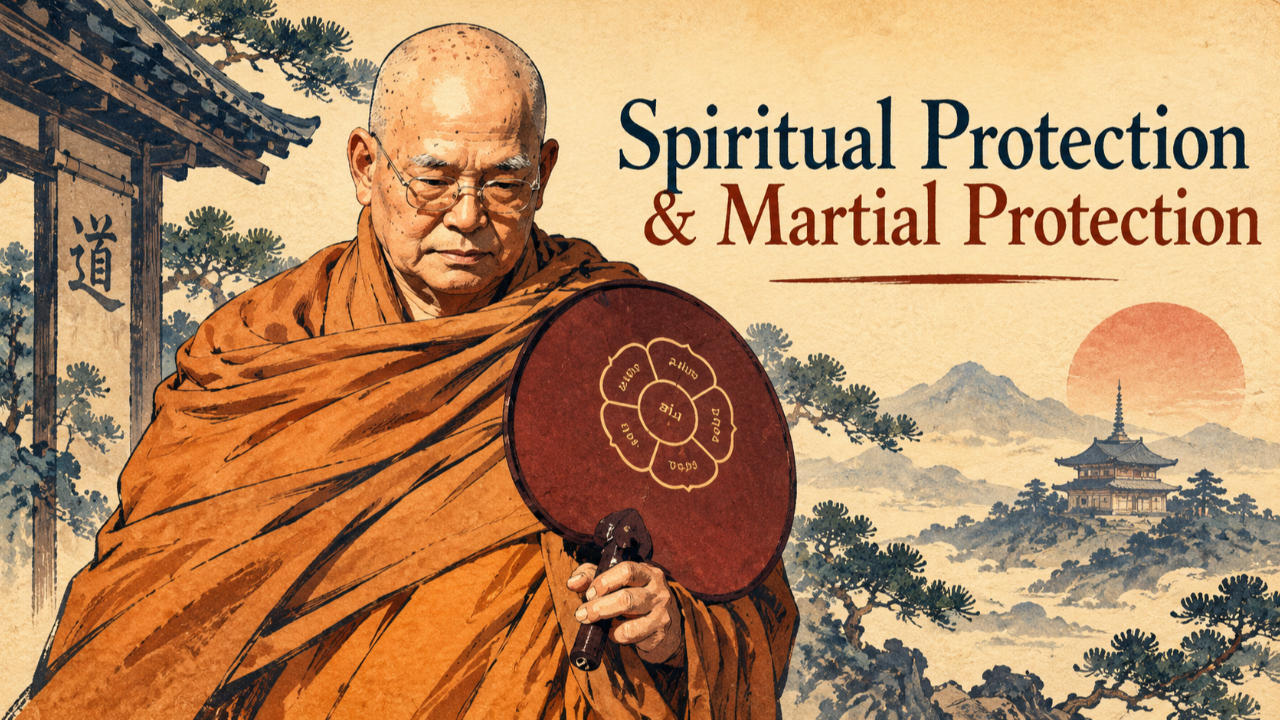
It was early 1998, and I had just completed an eight-year chapter of my life in Japan.
I had spent those years studying Aikido full-time with my teacher, Morihiro Saito Sensei, at the famous Iwama dojo.
By the time I left Japan, I had accomplished much of what I had set out to do. I had trained intensively, received my 4th dan, become fluent in Japanese, translated for Saito Sensei, immersed myself in Japanese culture, and had been teaching Aikido twice a week for several years.
In many ways, I felt confident about who I had become.
And yet something was missing.
Beneath everything I had gained through Aikido was a deeper spiritual calling that I could no longer ignore.
A Spiritual Calling That Could Not Be Ignored
When I left Japan at the end of 1997, Saito Sensei told me to return to the United States, open a dojo, and begin teaching.
I was certainly prepared to do that.
But inwardly, another movement had already begun.
As valuable as my growth through Aikido had been, I felt as though much of it was still taking place on the surface.
I had seen and practiced with many extraordinary teachers with incredible skill. They were wonderful people, and I deeply respected them. But I had an intuitive sense that I was looking for something more.
I was looking for a kind of spiritual embodiment that I had not yet encountered.
I wanted to go deeper, toward something that touched me at the very core of my being.
So instead of immediately opening a dojo, I decided to travel for a year and seek out spiritual teachers and formal spiritual practice.
During my last few years in Japan, I had already begun exploring meditation. I practiced daily and read extensively, but most of it was self-directed.
Two American Vipassana teachers had particularly influenced me: Joseph Goldstein and Jack Kornfield.
Both had practiced in Burma, and one teacher’s name kept appearing in their accounts:
Sayadaw U Pandita.
Something about that name penetrated and stayed with me.
I was drawn to the rigor of the Mahasi Vipassana tradition and eventually decided to go to Burma, seek out U Pandita, and practice with him.
But I was still carrying a very strong assumption with me.
I believed deeply that Aikido itself was a spiritual path.
O Sensei’s life seemed to confirm that belief, and I had invested years in the idea that if I simply trained long enough and deeply enough, the spiritual dimension would eventually reveal itself.
So I arranged my trip to Burma in a way that allowed me to maintain both worlds.
The Perfect Compromise
I had become friends with one of the senior teachers at the Iwama dojo, Inagaki Sensei.
For two years I taught his daughter English, and after the evening lessons, he and I would often sit around eating, drinking beer, and discussing deep philosophical matters.
Inagaki Sensei had been traveling to Burma to help establish and develop Aikido there.
I was fascinated by the Buddhism of Burma. And the possibility of also practicing and teaching Aikido while I was there made the whole trip even more intriguing.
So my plan was simple.
I would go to Burma and do a ten-day meditation retreat.
Then I would leave the retreat and attend a seven-day Aikido seminar led by Inagaki Sensei, where I would serve as his translator for the local Burmese Aikido community.
Afterward, I would return to the meditation center for another ten days of retreat.
Spiritual practice and martial practice.
I could have my cake and eat it too.
I had designed the perfect compromise.
Or so I thought.
Meeting U Pandita
After leaving Japan, I first went to New Zealand for a two-month stint teaching Aikido.
I spent a little time in Thailand, then flew to Rangoon and made my way directly to the Panditarama Meditation Center.
Unannounced.
When I arrived, I was told that U Pandita was away for the day and that I should check into a hotel and return the following morning.
But I had come a long way.
And I had been nurtured on stories of students having to prove their sincerity by sitting outside the temple gates for days before being admitted.
So I told them that I wanted to begin now.
Today.
And I waited.
Seven hours later, U Pandita finally returned.
As he passed through the reception area, he saw me. When he heard that I had been waiting there all day, he agreed to interview me.
I entered his quarters with a certain confidence.
Years in Japan as a disciple of my teacher had taught me discipline, etiquette, and how to behave around demanding teachers.
I assumed these qualities would make a favorable impression.
Instead, I immediately felt that something was quite different.
U Pandita’s presence filled the room.
There was an intensity to him that was difficult to describe.
I trusted him almost immediately.
But I also felt strangely exposed.
It seemed as if he could see something in me that I could not yet see myself.
He asked about my background in meditation.
I explained that I had been practicing on my own for a couple of years.
He asked why I had come to Burma.
I told him I was seeking spiritual liberation through meditation.
He asked why I had come to Panditarama.
I said that I wanted to train in the Mahasi tradition.
Eventually, the question of my schedule came up.
I explained that I intended to practice for ten days, leave for an Aikido seminar, and then return for another ten days.
He briefly asked:
“What is Aikido?”
I tried to explain.
Something got lost in translation.
I could tell he had not quite understood what I meant, but he agreed to let me stay on probation for seven days.
I was in.
I Had Found What I Was Looking For
Very soon after beginning the retreat, I realized that I had found the practice I had been looking for.
I had found the center and the conditions under which I wanted to practice.
And after the first Dharma talk and question-and-answer period with Sayadaw U Pandita, I realized something else:
I had found the teacher I had been seeking.
The next seven days were incredibly challenging.
The practice was rigorous physically, mentally, and energetically.
And yet, at the same time, I had the feeling that I was practicing in the lap of the Buddha.
My daily meetings with U Pandita continued to blow my mind.
Each encounter seemed to penetrate another layer.
I had found what I was looking for.
Now I only needed to go do this seven-day Aikido seminar.
Then I would come right back for more practice.
At least, that was still the plan.
“Sayadaw Says You Cannot Come Back”
At the end of the ten days, I packed my bag, went to the office, and told the front desk that I was leaving for the Aikido seminar.
I would be back in one week.
The staff seemed perplexed.
The nun who had been taking care of me asked me to wait.
She walked away.
A little while later she returned and told me:
“Sayadaw U Pandita says you cannot come back.”
I was certain there had been some misunderstanding.
Surely this could be sorted out.
I explained that the Aikido seminar was being taught by a Japanese friend of mine, a senior student from Iwama.
He needed a translator.
I was the translator.
People were depending on me.
My role in the seminar was important.
I was only going to be gone for one week, and then I would return and continue my meditation practice.
I really was serious about meditation.
The nun looked at me and repeated:
“Sayadaw says you cannot come back.”
I asked her to please ask him again.
I was sure that if he understood the situation properly, he would change his mind.
She looked at me with an expression that seemed to say:
These are not things you do.
You do not question the teacher.
Still, I requested another meeting with him.
Eventually she returned and told me that Sayadaw would see me.
I was asked to wait.
So I sat in the antechamber outside his room.
For two hours.
During those two hours, I rehearsed my case.
I worked out exactly how I would convince him.
After all, I was sincere.
Surely he would understand.
Especially once I explained that Aikido was not just some martial art.
It was a spiritual martial art.
Finally, I was called.
But instead of meeting him in his room, I was led outside to a loading area of the monastery.
A truck had just arrived.
And, strangely enough, it was delivering a large Buddha statue.
The Buddha was arriving.
And I was on my way out.
The irony did not escape me.
Trying To Convince The Teacher
Sayadaw U Pandita met me there and asked what I wanted.
I explained myself again.
I told him how meaningful the previous ten days had been.
This was what I had been looking for.
I apologized for the way I had arranged my schedule.
I explained that I had made a commitment to the Aikido seminar and that I needed to fulfill it.
Then I asked him to please allow me to return afterward.
He listened.
Then he told me that my retreat had gone well and I had practiced sincerely.
And, he said, the next time I came to Burma, I would be very welcome to return.
That should have ended the conversation but I couldn't accept it.
But I was convinced I could persuade him.
So I forged ahead.
I explained again how important my role was at the seminar.
I was the translator.
People were waiting for me.
They were depending on me.
I only needed to go do this one seminar, and then I would come right back and continue the retreat.
Once again, U Pandita told me that I was welcome to return on my next visit to Burma.
But I kept pushing.
I tol him I did not know when I would be in Burma again.
I was needed at the Aikido seminar.
Surely, if he simply understood my intention, he would allow me to return.
Yet as I continued laying out all the reasons why I deserved to be accepted back, something began to happen.
He simply stood there.
Listening.
Looking at me with that tremendous presence and penetrating stare.
And the longer I talked, the less secure I felt.
It was as if I had confidently walked out onto what I assumed was thick ice.
Then I began to hear it cracking beneath my feet.
He was giving me more and more rope.
And I was systematically tying it around my own neck.
“What Is Aikido?”
At this point, Sayadaw U Pandita asked again through the translator:
“What is Aikido?”
I explained that it was a spiritual martial art.
But once again, something got lost in translation.
When I described Aikido as a “spiritual martial art,” what seemed to make it through the translation was simply: martial art.
Sayadaw U Pandita turned and fully faced me.
He looked directly into my eyes.
And then, in English, he said:
“When you have spiritual protection, you don’t need martial protection.”
The words landed with tremendous force.
The Ground Dropped Out
For years I had assumed that technical Aikido practice would eventually lead me into its spiritual dimension.
I loved the martial training.
Up to that point, I had dedicated my life to it.
And somewhere inside me lived an unquestioned belief that if I just kept training long enough, enlightenment would eventually appear at the far end of the path.
But in that moment, through that encounter, with those fateful words, I saw how I had been fooling myself.
I knew that the spiritual dimension was what I most deeply desired.
And yet I was unwilling to loosen my attachment to the martial identity I had spent years building.
The very thing I believed would carry me toward freedom had become something I was clinging to for dear life.
Suddenly I saw just how much of my identity was wrapped around being an Aikido practitioner.
My past.
My accomplishments.
My confidence.
My sense of who I was.
My plans for the future.
All of it seemed to hang in the balance.
And when U Pandita said:
“When you have spiritual protection, you don’t need martial protection,”
the ground dropped out from under me.
I was shattered.
Completely disoriented.
The identity that had given me so much stability suddenly had nothing solid to rest on.
And beneath it, I encountered something far more valuable.
My own insecurity.
There was nowhere left to hide.
Surrender
At that point, there was nothing left for me to do but surrender.
With tears welling up, I told U Pandita that I would not go to the Aikido seminar.
I would cancel it.
I asked him to please let me stay at the meditation center and continue practicing.
His response surprised me more than anything else that had happened.
He said no.
And he sent me away like a schoolboy.
Losing The Ground Beneath Me
I left the monastery stunned.
Only a short taxi ride later, I found myself sitting in a Japanese restaurant in downtown Rangoon, drinking a beer with Inagaki Sensei and talking about the upcoming Aikido seminar.
The whole thing felt absurd. Something fundamental had shifted.
But I did not yet understand what.
Inagaki Sensei was excited about the seminar. He kept telling me how great it was going to be.
But for me, it was not great at all.
I went to the seminar.
I translated.
I practiced.
But Aikido no longer had the meaning for me that it would have had only days before.
Something had broken open.
After the seminar, I traveled for a bit in upper Burma.
Then, on my way to the airport before leaving the country, I stopped at the monastery.
I asked Sayadaw U Pandita for permission to come back to practice the next time I returned to Burma.
This time, with a smile on his face, he said:
“Yes. You are most welcome.”
Six months later, I returned for my first three-month intensive Vipassana retreat with him.
The one year of travel I had originally planned eventually became eight years of a much deeper spiritual journey, with repeated returns to Burma for extended intensive meditation retreats.
Looking For Spirituality In The Wrong Place
Why do I consider this one of the most important experiences of my Aikido life?
Because it exposed something fundamental.
I had been convinced of Aikido’s spiritual depth.
But I was looking for that depth in the wrong place.
The source of spirituality cannot be found in the physical.
Nor can it be found in the martial.
Those dimensions can certainly express spiritual realization.
Aikido can become a profound embodiment of spiritual principles.
But the martial form itself is not the source of spirituality.
My attachment to Aikido had prevented me from seeing that distinction.
And paradoxically, only after I loosened my grip on what I thought Aikido was supposed to give me did its deeper value begin to emerge.
I did not have to reject Aikido.
I simply had to stop asking Aikido to be something it was not.
That distinction changed my relationship to the art.
It also changed the direction of my life.
And it began with one simple sentence from a Burmese monk:
“When you have spiritual protection, you don’t need martial protection.”
